15 Best tattoo filler designs – tiny ideas you’ll love
Okay, I need to confess something – I have a tiny obsession with tattoo filler designs and the little ways they can make a sleeve or scattered pieces sing together. Every time I flip through flash sheets or sketchbooks I get that happy, slightly nervous buzz like I’m planning a mood board for my skin. It’s silly but true.
I made this post because so many of you ask how to choose filler pieces that don’t look random or too busy, and I have learned a few tricks the messy way – by trial and a lot of tape-on-skin testing. Over the years I have saved dozens of small motifs and watched them turn awkward gaps into parts of a cohesive story, and I want you to skip the fussy guessing. You’ll get a mix of visual ideas and practical notes you can actually use.
Read on and pick what feels right – I promise you will leave with concrete filler ideas and a couple of easy ways to explain them to your artist.
These 15 tattoo filler designs to complete your ink
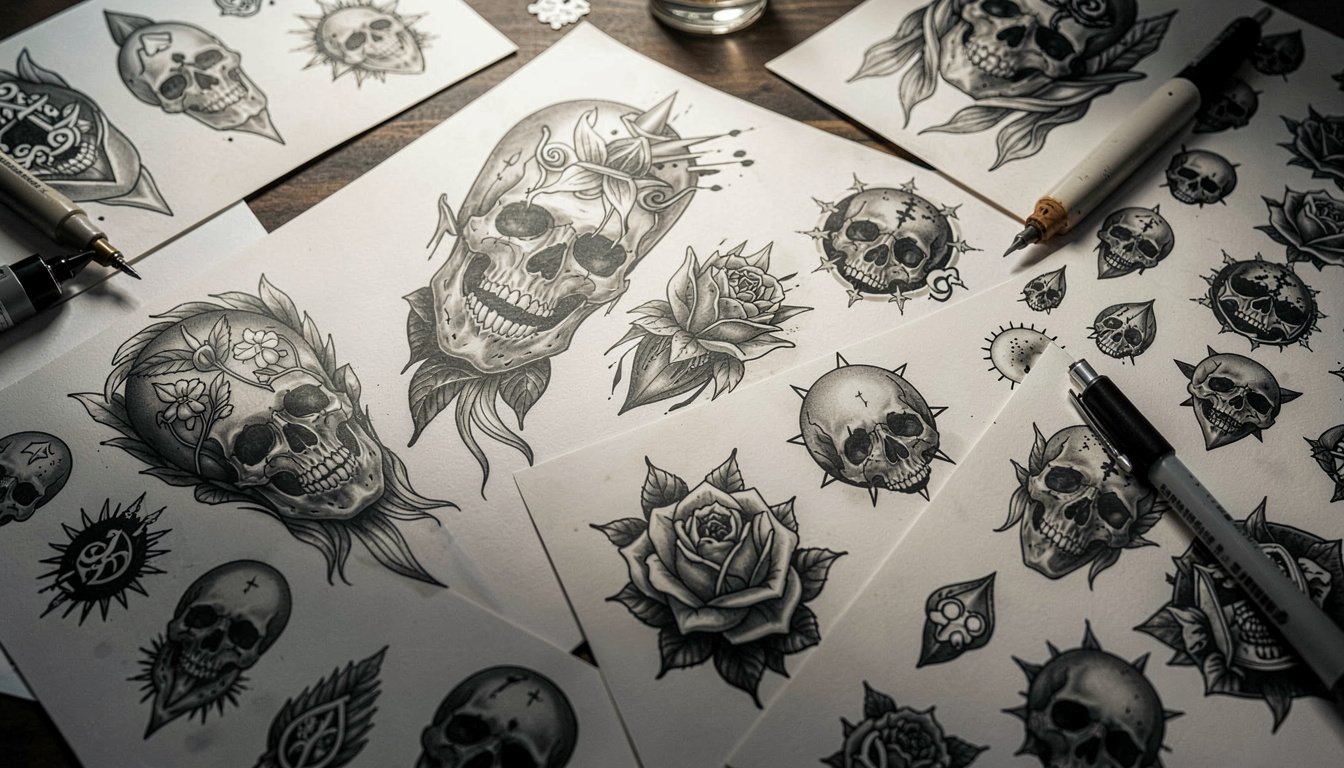
Skulls And Tiny Flowers

I love how tiny skulls peek out from clusters of petals – they give a playful dark edge without shouting, and that contrast is everything when you want depth. When I got my first filler idea sketched, I asked for micro-skulls with soft linework and small floral halos, and the artist loved the juxtaposition because it read clearly from a distance. If you like black and white balance, these little combos are perfect for bridging large motifs while keeping the theme cohesive.
All-Seeing Eye Cluster

This cluster of different eyes with little flowers in the center can read mystical and intimate at the same time, and I often suggest it to friends who want subtle symbolism. One time I convinced my roommate to add a single eye between two bigger pieces and she texted me the next day saying it finally felt “finished” – small wins matter. Use varied scales so the eyes feel like a motif rather than a repeated shape, and ask for delicate lashes or dots for texture.
Stars And Flowing Swirls

Stars and swirls are my go-to when the gaps feel rigid because they introduce movement and a tiny whimsical note without stealing focus. I had an awkward space near my elbow that I worried would always look like “a hole” until my artist suggested thin swirls sprinkled with micro-stars, and it transformed that spot into something that pulls your eye along a line. You can request more dense clusters near a main piece and lighter tails fading out to keep the composition airy.
Flash Variety Sheet

Sometimes the best filler is a little bit of everything from a flash sheet – tiny daggers, blooms, arrows, and anchors can be mixed to match your personal language of symbols. I keep a folder of these pages because when I’m indecisive I can point to a few pieces that feel like “me” and my artist will stitch them together with consistent line weight. If you layer different motifs thoughtfully, the overall effect reads like intentional collage work instead of a random patchwork.
Tattooed Figure Mood

This relaxed spread of tattoos on a single person gives you inspiration for how filler can live across muscle and curve – the shapes adapt differently on arms, ribs, and legs. When I was planning a full-side piece I studied reference photos like this to see how small motifs wrap around the body and how negative space breathes between larger images. Treat your filler ideas as choreography for the skin so nothing fights for attention.
Black And White Montage

This black and white montage shows how consistency in line weight can unify wildly different icons, and I always point this out to people who want variety without chaos. For my last session I asked for similar dotwork and fine lines across new filler pieces so everything felt intentionally related, and that small rule made the whole half-sleeve look custom. Think of your line language as the glue that holds disparate images together.
Vintage Beige Sketches

I adore the warmth that a beige or aged-paper background adds to flash drawings; it makes tiny fillers read as vintage curios instead of modern clip art. Once I printed a few of these tones for a consult and the client immediately gravitated toward softer shading and old-school dots, which helped decide the palette. If you love nostalgia, ask your artist to reference aged illustrations to guide shading choices.
Abstract Black Ink Marks

Abstract marks and painterly strokes are underrated as filler because they add breath and contrast without demanding literal interpretation. I once asked for a few brush-like strokes to sit between a flower and a script piece, and those marks made the composition feel like an actual painting on skin. Use strokes sparingly to suggest motion, and have your artist vary opacity for depth.
Skull Lettering Motif

Turning letters into tiny icon clusters – like skulls forming a “C” – is a smart way to sneak initials or words into filler without loud script. A friend of mine had a monogram made of tiny roses and anchors and it felt like a secret; I love how that personalizes fillers. If you want meaning tucked into small spaces, this is a playful, clever route.
Eclectic Flash Mix

Mixing eclectic flash items can create an adventurous filler language that reads as intentional randomness when done with restraint and rhythm. I encourage clients to pick a motif or two they love and let the artist fill around them with smaller echoes so the eye has a path. Maintain a consistent scale range and you’ll keep things unified even with diverse imagery.
Botanical Butterflies Duo

Flowers and butterflies are classic fillers for a reason – they soften edges and introduce organic shapes that help other pieces breathe. I once planned a garden-themed forearm and used tiny butterflies like punctuation between larger blooms, and that decision made the whole composition feel whimsical rather than cluttered. Keep the lines fine for delicate areas and go slightly bolder where the skin is flatter.
White Background Flash

Simple white-background flash sheets let you see clean line ideas for fillers without distraction, which is great when you want clarity in design. I sometimes bring sheets like this to consultations so my artist and I can point and say “this kind of feather, that kind of star” and instantly be on the same page. They help speed decisions and keep results crisp.
Tiny Star Cluster

Small star clusters are deceptively powerful because a handful of dots and star points can guide the eye from piece to piece like punctuation marks. I used tiny stars around an older ink to breathe new life into it, and people kept complimenting the “freshness” without knowing why. Try spacing them to mimic constellations for a personal twist.
Hexagon Color Pop

If you’re into a hint of color, a few geometric hexagons in red or muted tones can weave modern contrast into otherwise black and white work. I suggested a single red hexagon behind a feather once, and it created a focal whisper that made the piece feel curated and modern. Use color rarely and with intent so it reads like accent, not a label.
Arrows And Minimal Icons

Arrows, tiny daggers, and minimalist icons are perfect for connecting physical direction on the body – they can point toward a central piece or fill elongated negative spaces. When I was planning a rib piece I used small arrows to visually guide the design, and the entire composition read cleaner because the motion felt intentional. Ask for tapered points and subtle dotwork to keep these elements light-handed.
How to Actually Make This Work For You
Start by collecting images that evoke the mood you want and then narrow them down to shapes and line styles rather than literal images, because consistency in line weight and spacing will make a big visual difference, and you should bring several scaled printouts to your appointment so the artist can trace or reference directly. Talk to your artist about negative space and flow – some filler looks best when it breathes away from a focal piece, while other small motifs work as visual glue to connect elements, so ask for placement mockups on tracing paper or temporary transfers. Finally, be open to tweaks during the session since small shifts in size or rotation can change how a filler reads on curved skin and your artist will be able to improvise in ways a flat photo cannot.
How do I choose filler tattoos that match my existing style?
Answer – Look at the dominant line weight, shading style, and motif scale across your current tattoos and pick fillers that echo those three elements; bring examples and ask your artist to harmonize new pieces with your existing language. If your work is mostly fine-line, stick to delicate fillers, and if it’s bold traditional take a chunkier approach.
Can filler designs be added over time or should I plan all at once?
Answer – You can definitely add fillers over time and it’s often preferable because it lets you test what works; however, having a loose plan for flow and spacing helps so future additions don’t feel random. Keep a visual file of ideas and note the areas you want connected.
Are tiny fillers painful or faster to heal?
Answer – Tiny filler tattoos are usually quicker and can be less painful because the sessions are short, but healing depends on placement and aftercare; always follow your artist’s instructions for cleaning and moisturizing. Spots like ribs or inner arms might sting more than fleshy areas, regardless of size.
How can I make filler tattoos look cohesive across different sessions?
Answer – Maintain a consistent artist or at least ensure any new artist studies your previous work and mirror the line weight, shading technique, and dot style; keeping to a palette of black and a single accent color also helps unify pieces. Communication and reference photos are the best tools for cohesive results.